
A couple of years ago, SSAB's marketing team made a decision that most organizations keep postponing: to take full ownership of their data. The landscape at the time was typical of large B2B organizations – multiple systems, manual processes, and marketing and sales working from different views of the same customers. The question was what to do about it.
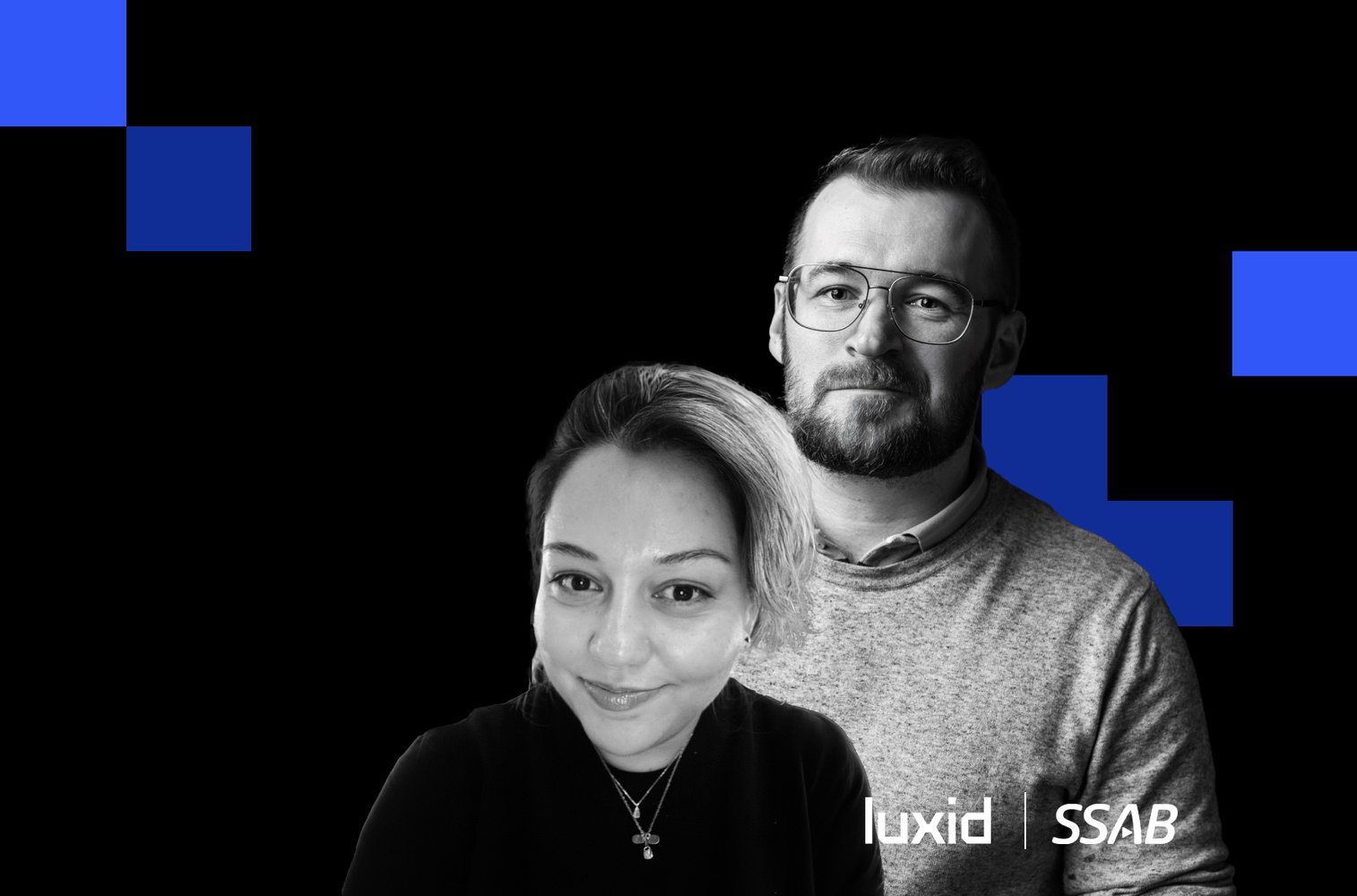
At the Salesforce Agentforce World Tour Helsinki 2026, Asli Kozan, MarTech and Digital Performance Manager at SSAB, and Mikael Björkqvist, Head of Data & Development at Luxid, stepped on stage to share what happened next. Not a roadmap from a whitepaper. An actual two-year transformation journey, with the work, the tradeoffs, and the outcomes to show for it.
Why not just start with AI?
This is the question most organizations are quietly asking themselves. AI tools are everywhere. Budgets are being allocated. Pilots are being launched. But Asli and Mikael's first, and perhaps most important, point was a simple one: if you don't have a solid data foundation, AI doesn't save you. It accelerates your mistakes.
AI is a multiplier, not a shortcut. Without clean, connected, trustworthy data underneath it, you end up with poor results and poor decisions, only faster. That realization was what shaped SSAB's entire approach.
The strategy: own your data
Before anything was built, SSAB made a set of deliberate strategic choices that most organizations skip. Executive buy-in wasn't a checkbox. It was the starting gun. Leadership framed data and AI as a long-term business asset, not an IT project. The team committed to building durable, centralized capabilities rather than a patchwork of siloed tools and vendor-dependent features. The guiding principle: owned data equals control, resilience, and long-term insight.
This shift, from reactive to proactive and from vendor dependency to data ownership, was the foundation of everything that followed.
What was actually built
The work happened in stages, each one building on the last.
First came the data foundation: a centralized data warehouse pulling from marketing and sales data across multiple sources, with harmonized definitions and logic across business units, brands, and markets. Marketing took ownership of this layer, deciding what data is trusted, how it's governed, and what it means.
On top of that came customer understanding. A Customer 360 model brought together marketing touchpoints with sales and CRM activity, giving both teams the same view of customer behavior. Not just firmographics, but actual behavioral signals. Marketing and sales stopped operating from different versions of reality.
Then performance insights: automated BI reports, updated daily, eliminating the manual consolidation work that had been eating up hours across the team. Full operational visibility, in one place, without the spreadsheet gymnastics.
These three layers are what made the next steps possible.
Where things are heading
With the foundation in place, SSAB is now building into activation through a Customer Data Platform (CDP), enabling event-based triggers, faster and more precise targeting, and tighter marketing-sales alignment. And beyond that: AI readiness. Natural language analytics, AI sitting on top of trusted data, and multi-agent capabilities. Not as a moonshot, but as a logical next step from a solid base.
The AI isn't replacing the foundation. It's running on it.
Two years. Real outcomes.
After two years of collaboration, SSAB's marketing unit achieved something that most organizations are still chasing: a marketing-owned data foundation they can trust. Automated insights on customers and performance replaced manual reporting. Targeting and lead operations improved meaningfully. Marketing spend, engagement, and conversions were optimized.
The team also moved significantly along both the marketing maturity curve, from mass marketing toward event-based communication and data-enabled customer dialogue, and the analytics maturity ladder, from basic reporting toward predictive and AI-assisted decision-making.
What this means for everyone else
The SSAB and Luxid story isn't about a unique set of circumstances. It's about a pattern that applies across B2B organizations regardless of industry.
Most of the work in a genuine AI transformation happens below the surface: data foundations, governance, modeling, alignment. The visible AI layer at the top, the natural language queries, the automated recommendations, the agent workflows, only delivers value when the invisible layers underneath are solid.
The winners won't be the ones with the most AI tools. They'll be the ones with trusted data, clear ownership, and the organizational will to act on it.
Mikael Björkqvist is Head of Data & Development at Luxid. Asli Kozan is MarTech and Digital Performance Manager at SSAB. They presented this case together at the Salesforce Agentforce World Tour Helsinki in May 2026.